
What Tools and Medications Actually Help You Quit Nicotine — and Do They Really Work?
Quitting nicotine is one of the hardest behavior changes most people ever attempt. It’s not just the chemical dependency — it’s the ritual, the stress relief, the habit loops, and the moments tied to using nicotine. Many people try to quit with willpower alone, but the data is clear: structured tools, medications, and habit-replacement strategies dramatically increase success rates.
This guide breaks down every major tool available today — from apps and structured reduction programs to nicotine replacement therapies (NRTs) and prescription medications — and explains what actually works, why it works, and how to choose the right path for you.
1. Behavioral & Lifestyle Tools (Non-Medication Support)
Digital Tools and Quit-Tracking Apps
Quit-tracking apps like Quit Genius, Smoke Free, and QuitNow provide structure when motivation dips. They help you:
- Track progress (days nicotine-free, money saved, withdrawal patterns)
- Identify triggers
- Get community motivation
-
Follow guided reduction or quit plans
These tools increase accountability and support — two things proven to boost long-term success.
Structured Reduction Programs
Cold turkey works for some, but for many, quitting abruptly causes intense withdrawal symptoms and faster relapse. Gradual reduction programs use controlled steps to lower nicotine intake over time.
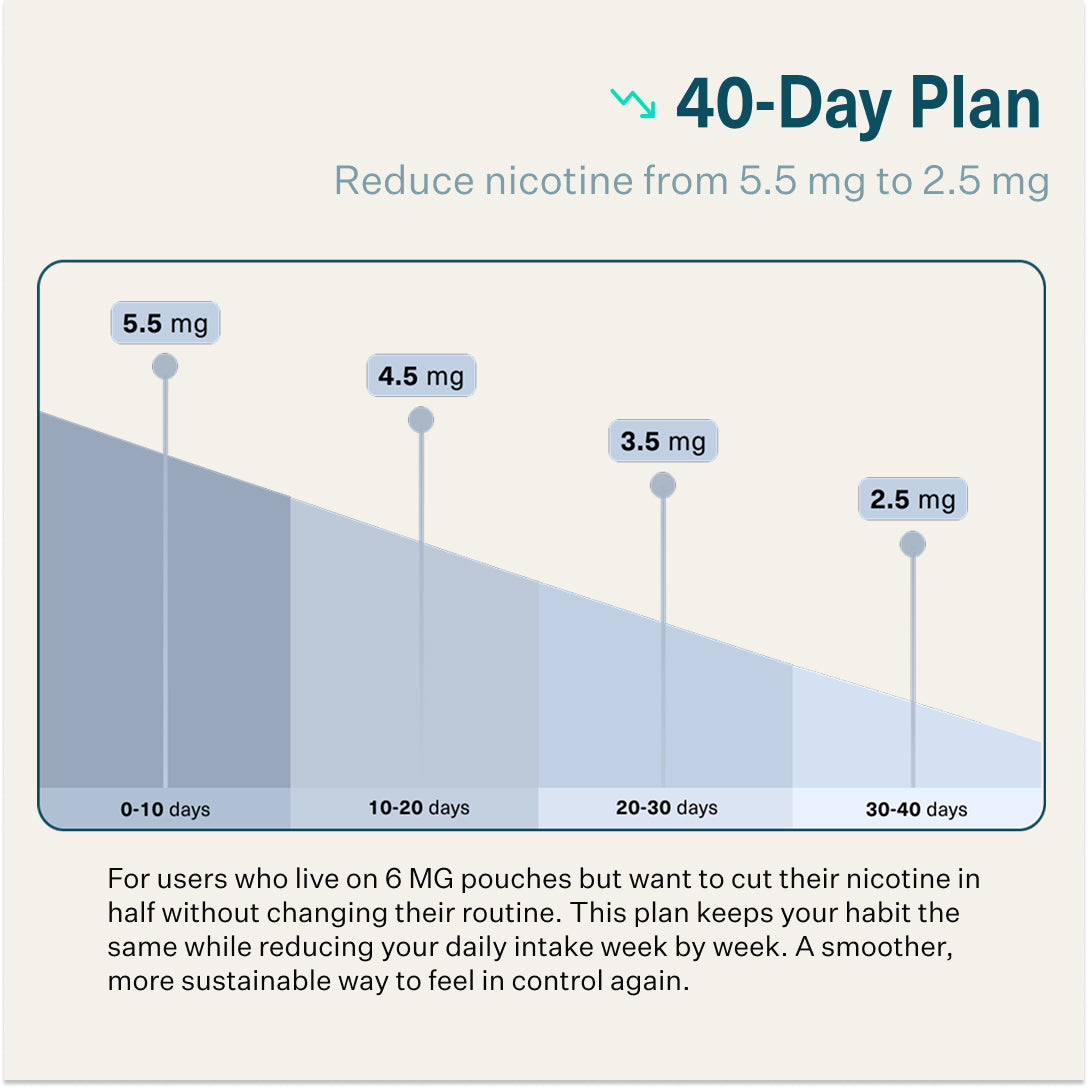
ShiftPouch’s 40-Day Reset, Low Nicotine Plans, and 0.0 MG Blanks fall into this category. They’re built around:
- Reducing nicotine step-by-step
- Keeping the ritual the same (so habits don’t break abruptly)
- Giving your brain time to adjust
-
Reducing withdrawal intensity
Tapering often leads to higher long-term success rates because it makes the process feel manageable rather than overwhelming.
Coaching & Counseling
Behavioral therapy—either 1:1, digital coaching, or phone counseling—can double or triple quit rates.
Experts help you:
- Identify triggers
- Change routines
- Build coping strategies
-
Stay accountable
Studies from the CDC and WHO show that behavioral support + medication is the most effective quitting strategy available.
2. Over-the-Counter Nicotine Replacement Therapies (NRTs)
Nicotine Replacement Therapy gives you nicotine without tobacco or smoke, helping ease cravings while you break the behavioral habit.
Common NRT Options
- Nicotine Patch — steady release over 16–24 hours
- Nicotine Gum — useful for oral fixation or sudden cravings
- Nicotine Lozenges — discreet, slow release
-
Nasal Sprays and Inhalers — fastest relief, prescription-only
How NRT Works
NRT provides a lower, controlled dose of nicotine to reduce withdrawal symptoms such as:
- Irritability
- Headaches
- Cravings
-
Anxiety
Pros
- Readily available
- Clinically proven
- Flexible
-
Significantly safer than tobacco use
Cons
- Some people stay on NRT longer than intended
- Doesn’t replace the behavioral ritual unless paired with habit tools
-
Can be expensive depending on usage
Still, NRT is one of the most evidence-backed quitting strategies worldwide.
3. Prescription Medications That Help You Quit
Two medications—both non-nicotine—are commonly prescribed for quitting.
Varenicline (Chantix)
How it works:
It partially activates nicotine receptors in the brain, reducing cravings and blocking the enjoyable effects of nicotine if you relapse.
Effectiveness:
Research shows Chantix significantly increases quit rates compared to NRT alone.
Considerations:
- Requires prescription
- Possible side effects (nausea, vivid dreams)
-
Should be used under medical supervision
Bupropion (Zyban / Wellbutrin)
Originally an antidepressant, Bupropion helps reduce withdrawal symptoms and cravings.
Best for:
- People with depressive symptoms
-
Those who want a non-nicotine approach
Key notes:
- Requires prescription
-
Not suitable for everyone (e.g., seizure disorders)
Both medications are proven to work, especially when combined with behavioral support.
4. Non-Nicotine Alternatives & Modern Approaches
Nicotine-Free Pouches
Nicotine-free options allow people to keep the ritual without the addictive component. Products like Shift Blanks (0.0 MG) help:
- Break the psychological addiction
- Maintain oral fixation
- Reduce withdrawal stress
-
Support long-term nicotine freedom
They’re ideal for the transition period after reducing nicotine.
Habit-Replacement Methods
Quit strategies work best when paired with replacements such as:
- Deep breathing
- Chewing sugar-free gum
- Mindfulness apps
- Fidget tools
-
Hydration routines
These reduce triggers and help reset habitual patterns.
5. Which Method Works Best? (Success Rates Explained)
Research consistently shows:
The Most Effective Strategy = Medication + Behavioral Support
Using Chantix, Bupropion, or NRT together with counseling or structured programs produces the highest quit success rates.
Gradual Reduction Strategies
People who slowly reduce nicotine often experience fewer relapses because:
- Withdrawal is milder
- Habits remain stable
-
Stressors are easier to manage
Programs like ShiftPouch’s 40-Day Reset follow this model and align with CDC-supported tapering methods.
Cold Turkey
Cold turkey can work — but success rates are significantly lower unless supported by strong external motivation or social support.
6. Cost & Accessibility
A quick overview of common quitting tools:
|
Method |
Cost |
Notes |
|
NRT (gum, patch, lozenges) |
$$ |
OTC, easy to access |
|
Apps & digital tools |
Free–$ |
Good for tracking |
|
Chantix / Bupropion |
$$–$$$ |
Prescription only |
|
Structured reduction programs |
$–$$ |
Scalable, customizable |
|
Nicotine-free pouches |
$ |
Great for the final transition |
Many regions (U.S. & Canada) offer:
- Free quit coaches
- Subsidized NRT
-
Covered prescriptions through health plans
7. Expert Tips for Making Any Method More Effective
Regardless of the tool you choose, these habits improve success:
- Set a clear goal: reduce or quit
- Track your usage
- Identify and avoid triggers
- Build replacement rituals
- Celebrate every milestone
- Share goals with friends/family
- Seek support when withdrawal peaks
- Small adjustments compound over time — quitting is a series of shifts, not a single event.
8. Conclusion: You Don’t Need Willpower Alone
Quitting nicotine isn’t about punishment. It’s about finding the tools, medications, and routines that fit your life. Whether you choose NRT, prescription medication, structured reduction, or nicotine-free alternatives, the key is structure — not struggle.
ShiftPouch was built on that belief. If you’re looking for a gradual, real-life program that reduces nicotine without disrupting your ritual, explore the 40-Day Reset, Low Nicotine Plans, and 0.0 MG Blanks.
Progress doesn’t have to be painful — it just needs a plan that works.